The closing table
Selling a house with solar: what actually happens
By Jake Breaux, solar industry expert · Updated
The short version
The structure you signed decides everything. Loans get paid off at closing from your proceeds. Leases and PPAs require the buyer to qualify and assume, which is the most common way solar kills a deal. A subscription has no lien, nothing to assume, and a worst case measured in months.
What happens to solar panels when you sell your house?
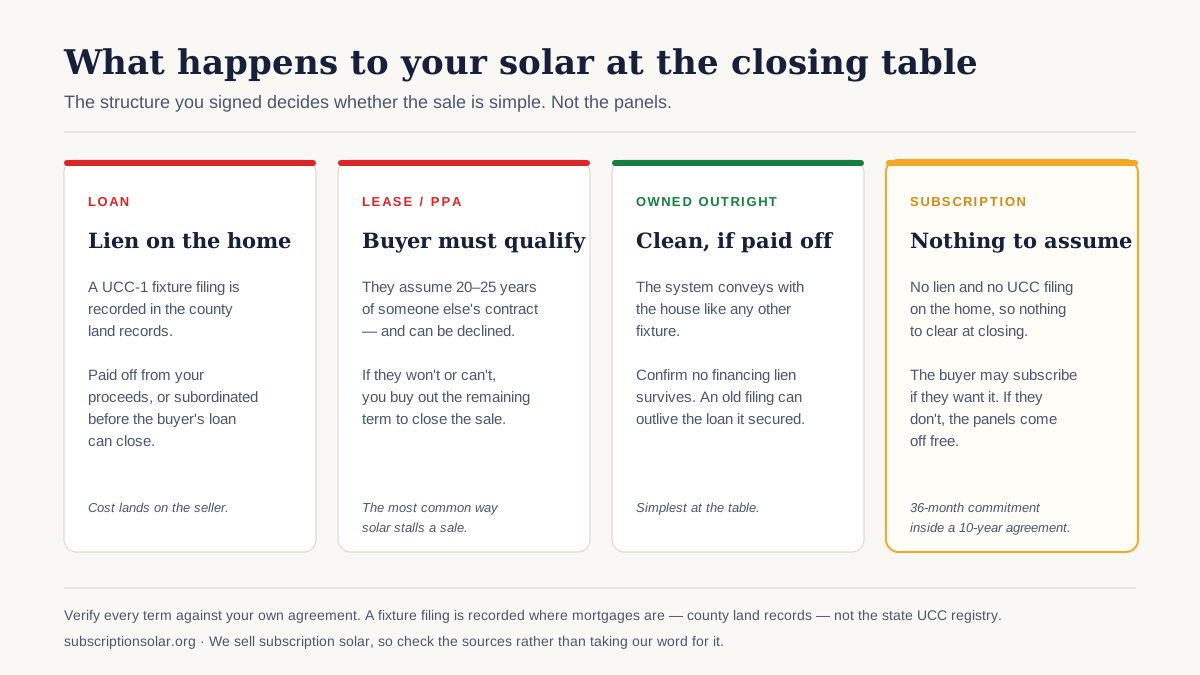
It depends entirely on the structure you signed: a loan gets paid off at closing from your proceeds, a lease or PPA must be assumed by the buyer or bought out, owned panels convey with the house, and a subscription simply ends or continues at the buyer's choice with no lien involved. Here's each one at the closing table.
Solar loan
A loan usually comes with a UCC filing or a lien on the property. At closing it gets paid off from your proceeds, like a second mortgage. If the panels haven't appreciated your sale price by the payoff amount, the difference comes out of your pocket. Ask your lender for the payoff figure before you list.
Lease or PPA (the 20–25 year kind)
The buyer has to qualify for and assume the remaining term, or you have to buy the contract out. This is the single most common reason solar complicates a home sale: a buyer who loves the house but doesn't want a 22-year power contract, or doesn't clear the credit screen for it. Buyouts routinely run five figures. If you have one of these, get the assumption requirements and the buyout schedule in writing before your first showing.
This isn't just market folklore. Fannie Mae's Selling Guidesets out what a lender must do when a property has solar panels, including obtaining a UCC search to confirm whether the panels are claimed as collateral, and treating leased and financed systems differently from owned ones. Your buyer's lender is following that document, so it is worth reading before you assume the panels are a selling point.
Owned outright
Clean. The panels are a fixture, they convey with the house, and they generally help the appraisal. This is the easy case, which is why "just buy them" is good advice for people staying put with cash to deploy.
Subscription
There is no lien on the home and the buyer has nothing to assume or qualify for. Two paths at the sale:
- The buyer wants the panels: they may choose to subscribe themselves. Nobody is obligated, and it's their choice, not a transfer.
- The buyer doesn't want them: the provider removes the system at no cost and repairs anything the system caused.
Your worst case is the remainder of the 36-month commitment (the real commitment inside the 10-year agreement) if you sell early. A known, small, finite number. Not a 22-year obligation somebody has to be talked into.
What to tell your realtor
- The system is subscription solar: no lien, no UCC filing, and it isn't part of the mortgage or title picture.
- Nothing conveys with the house unless the buyer chooses to subscribe. Free removal is available if they don't.
- The listing doesn't need "solar lease assumption required" language. That's the phrase that scares buyers, and it doesn't apply here.
What to ask before you list
- How many months remain on the 36-month commitment (the cancel-anytime point inside the 10-year agreement), and what does the agreement say about selling inside it?
- What's the process and timeline for removal if the buyer declines?
- Is there an incentive if the buyer subscribes? Ask your provider what applies to your agreement.
- Get all of it in writing from the provider, not from a salesperson's summary.
Which solar structure should you choose if you might move?
Time in the home is the most important input for choosing a solar structure. Staying 20+ years and want to own an asset? Cash or a loan probably wins. Somewhere in the 3–15 year range, or genuinely unsure? A subscription is the structure built for exactly that. Planning to move inside three years? That's the honest edge case. The remaining-months math is small but real, so run it before you sign. Start with your roof's numbers and a real person will walk you through the rest.
Sources
We sell subscription solar, so don't take our word for the contract mechanics. These are the primary sources: check them.
- Selling Guide B2-3-04, Special Property Eligibility Considerations, Fannie Mae
What a mortgage lender must do when a property has solar panels: obtain a UCC search, confirm whether the panels are claimed as collateral, and treat leased or financed systems differently from owned ones. It also requires that a fixture filing ranking ahead of the mortgage be subordinated. This is the rule your buyer's lender actually follows.
- UCC § 9-334, Priority of Security Interests in Fixtures and Crops, Cornell Legal Information Institute
The statutory basis for a fixture filing, the mechanism that turns equipment attached to your house into a secured claim against the property.
- UCC § 9-501, Filing Office, Cornell Legal Information Institute
Where a fixture filing actually gets recorded: the same office that records a mortgage on the property, meaning county land records rather than the state's central UCC registry. This is the detail most pages on this topic get wrong.
- Buyer's Remorse: The FTC's Cooling-Off Rule May Help, Federal Trade Commission
Sales made at your home can carry a three-day right to cancel. Worth knowing before you sign anything a door-to-door rep puts in front of you, from us or from anyone else.
Want the numbers for your actual roof?
See your roof's numbers